

AI Virtual Staging: Mind-Blowing Transformations for Real Estate in 2026
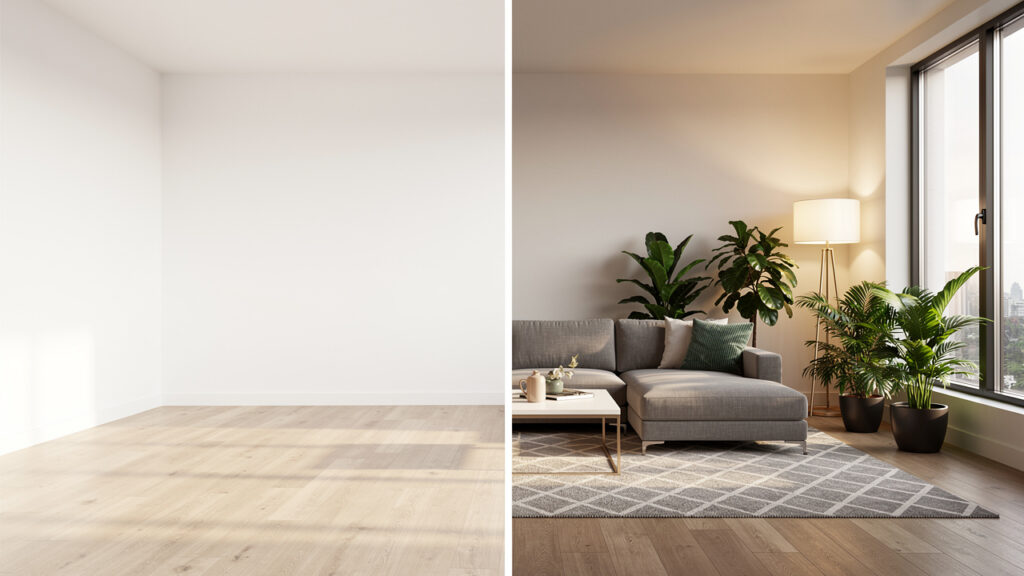
Picture a tired, empty listing that has been sitting for weeks. The photos feel cold, rooms look smaller than they are, and every showing ends with the same comment: it is hard to imagine living there. Then new images go live showing warm furniture, clear layouts, and a polished style, all created in minutes by AI virtual staging that costs less than a single day of furniture rental.
Many of us feel constant pressure to produce high-impact visuals while juggling tight budgets and deadlines. Stagers, photographers, and long back-and-forth editing cycles slow projects, while buyers now expect rich imagery, video walk-throughs, and styled interiors on almost every listing, not just luxury ones. That is exactly why AI Virtual Staging: Mind-Blowing Transformations for Real Estate in 2026 has moved from buzz phrase to standard practice for serious marketing.
More than seventy percent of agents in North America already use some form of virtual staging, and analysts expect the market to grow at about eighteen and a half percent per year through 2033. Staged photos help homes sell faster and often at stronger prices because buyers can instantly see how a space works. In this article, we cover how AI virtual staging works, how it compares to older methods, which tools stand out for 2026, and how to plug this tech into a daily workflow. Along the way, we show how VizCloud keeps this process simple and fast, without requiring design software skills.
Key Takeaways
Before we dive deeper, here is a quick snapshot of what we cover and why it matters:
-
Cost savings: AI virtual staging can cut presentation costs by up to ninety five percent compared with physical staging, turning projects that once cost thousands into work that may cost only a few dollars per image.
-
Speed: Time drops from weeks of planning, moving, and shooting to about five minutes per image, so properties can go from vacant photo to fully styled gallery in a single coffee break.
-
Competitive edge: With projected yearly growth around eighteen and a half percent and adoption already topping seventy percent among many North American agents, waiting means competing against listings that simply look better online.
-
Accessibility: Professional grade visuals are no longer limited to people with advanced 3D or Photoshop skills. Modern tools read a room photo and return a photoreal design with almost no learning curve.
-
Transparency: Clearly labeling images as virtually staged keeps buyer trust high. Used this way, AI staging guides better decisions instead of hiding flaws, and platforms like VizCloud support that workflow.
“You never get a second chance to make a first impression.”
— Often quoted in real estate marketing, and perfectly true for listing photos
What Is AI Virtual Staging and How Does It Actually Work?

At its core, AI virtual staging is smart software that takes a photo of an empty or furnished room and adds furniture, decor, and finishes that look real. Instead of dragging 3D models by hand, the system studies the photo itself. It reads walls, floors, windows, light direction, and room size, then builds a finished scene that fits those details.
The workflow is straightforward:
-
Upload a room photo.
-
Add notes such as desired style or room function.
-
In some tools, enter rough dimensions or key measurements.
-
Let the AI analyze perspective, light sources, and existing objects, then generate the staged image.
The software decides where a sofa should sit, how big a rug should be, and how shadows fall so the final image looks like a real photograph, not a cut-and-paste collage.
Older, manual virtual staging relied on Photoshop skills and hours of masking, blending, and shadow work. That approach could succeed but often left “floating” chairs, odd shadows, or items that felt slightly off scale. Modern AI staging is trained on millions of interior photos, so it has a learned sense of how furniture usually sits in space. It respects vanishing points, reflects light correctly, and sizes items to match the real room.
Many tools also let us plug in real products from retailer websites. We can paste a link to a specific sofa, table, or light, and the AI builds a scaled version of that piece inside the photo. With a photo, basic dimensions, and a couple of links, clients get a true “try before you buy” view of their own room. VizCloud smooths this process further, offering AI powered rendering for both photos and design files, so we get photoreal results in minutes without any specialized software training.
The Evolution: From Physical Staging to AI-Powered Precision

To appreciate the size of this shift, it helps to look back at how staging started. For years, physical staging was the only option. That meant renting furniture, booking movers, hiring a stylist, and coordinating schedules with owners and photographers. Costs often ran from one and a half thousand dollars to ten thousand dollars or more per project, and once a style was installed, changing it meant starting again.
Then came manual digital staging using tools like Photoshop. This step removed trucks and furniture, but added a different kind of work. Skilled artists spent hours cutting objects, matching shadows, and trying to keep proportions believable. Turnaround times still ran one to three days per image, and even then, the final results sometimes looked a bit flat or “pasted on.”
AI powered staging has pushed the process into a new phase. Machine learning models trained on large image sets now understand perspective, light, and scale very well. They generate new, photoreal scenes in under five minutes per image.
Here is how the old and new approaches compare:
|
Feature |
Traditional Physical Staging |
Manual Digital Staging |
AI Powered Virtual Staging |
|---|---|---|---|
|
Cost |
$1,500–$10,000+ per project |
$30–$300 per image |
About $0.10 per image |
|
Time |
1–3 weeks |
1–3 days per image |
Under 1 minute per image |
|
Flexibility |
Very low |
Moderate |
Very high |
|
Revisions |
Costly and slow |
Possible but slow |
Fast and simple |
|
Realism |
Perfect, because it is real |
Varies a lot |
Very high with good AI |
|
Scalability |
Hard |
Moderate |
Easy at volume |
Agents and developers have responded quickly. Analysts expect around eighteen and a half percent yearly growth in this market through 2033. Over seventy percent of North American agents already rely on some version of virtual staging, and about sixty seven percent of buyers say rich visuals are a top priority. One report from Morgan Stanley suggests AI could automate more than a third of tasks across real estate. VizCloud sits in this new phase, combining the speed and affordability of AI with quality that stands beside traditional photography.
Core Capabilities: What Modern AI Staging Platforms Can Actually Do
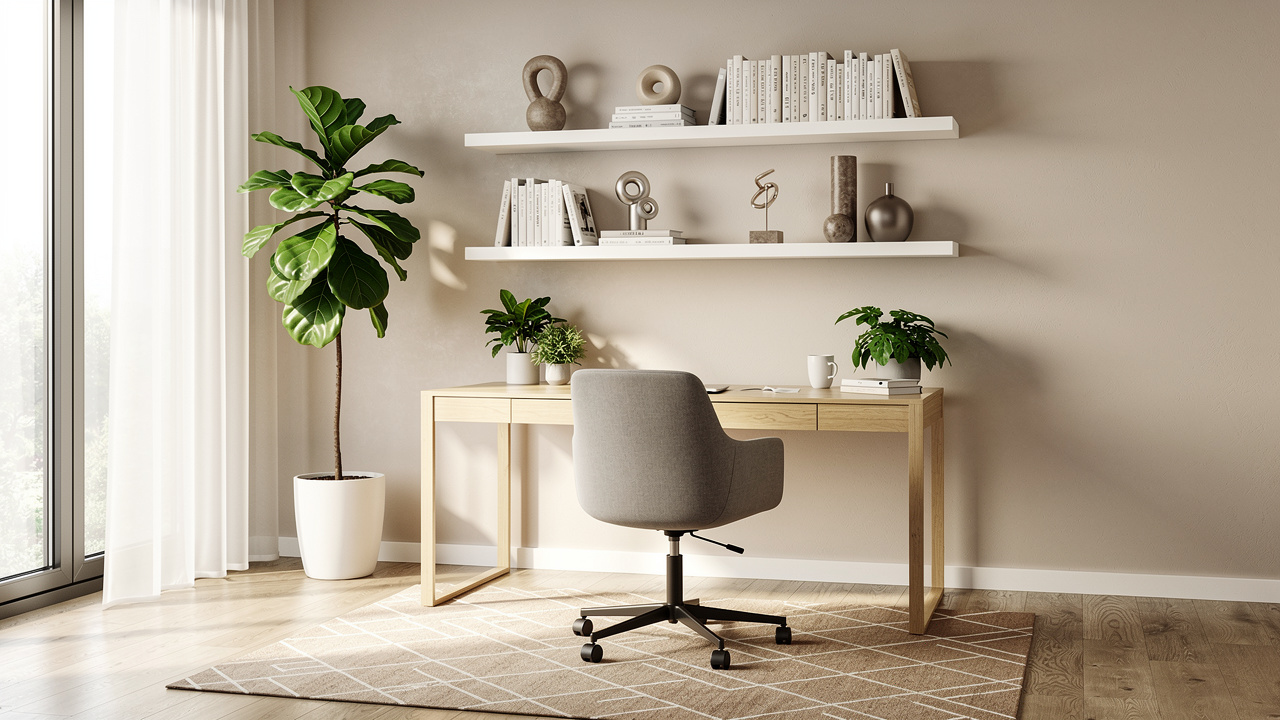
Modern AI staging platforms are more than “add a sofa” tools. They act as compact visual studios that cover furniture, finishes, lighting tweaks, and even video from the same interface.
Key capabilities include:
-
AI furniture placement and styling:
Upload a bare room and request Modern, Farmhouse, Scandinavian, luxury, or many other looks. The system selects furniture, art, rugs, and lighting that match that style and the room layout, so a small condo bedroom does not get an oversized sectional. -
Furniture removal and decluttering:
If a seller has dated or heavy pieces, AI can “empty” the room digitally before restaging. Some tools erase one item at a time, such as a single chair, toy pile, or wall unit that blocks the view, giving us a clean canvas without asking owners to move everything. -
Virtual renovations and restyling:
Walls can shift from beige to deep blue, carpets can become hardwood, and tired cabinets can appear with new doors and counters. Buyers see past current finishes and focus on layout and light, while developers and designers can show different finish packages using the same base photo. -
Exterior and yard improvements:
Exterior views can show fresh plantings, new walkways, updated siding, or a softer evening sky instead of harsh midday sun. Many platforms also offer image improvement features such as sharper detail, better contrast, and cleaner color balance.
Some platforms, including VizCloud, support real product integration and motion. We can bring in exact pieces from retail sites, then turn stills into smooth video tours with camera moves, music, and even voiceover. Combined with 360 degree staging for panoramic shots, this covers everything needed to present a property from every angle. VizCloud provides this toolset in one place through focused modules for exterior, interior, staging, style, image improvement, and editing, so we are not jumping between several apps for each listing.
The Business Case: ROI and Strategic Advantages for Real Estate Professionals
The real strength of AI virtual staging shows up in basic numbers. Physical staging often runs from $1,500 to well over $10,000 per project once we add furniture, delivery, styling, and removal. By contrast, AI virtual staging often falls in the $15 to $50 per image range, sometimes lower on volume plans. That shift can cut costs by ninety five percent or more, reshaping budgets for single agents and large teams.
Time is the second major gain. Instead of waiting one to three weeks for schedules, installs, and photo shoots, we can take new photos and have fully styled images the same day. When inventory moves fast, that speed keeps listings from losing momentum while we coordinate a traditional staging crew.
Marketing flexibility may be the most underrated advantage:
-
The same room can appear in several styles (loft, family focused, minimalist) at almost no extra cost.
-
We can test different layouts for awkward spaces and keep only the versions that resonate with buyers.
-
Campaigns can be refreshed mid-listing with updated visuals without touching the physical property.
There is also a clear impact on buyer behavior. Research from the National Association of Realtors shows that eighty one percent of buyers say staging helps them picture themselves living in a home. When empty rooms look inviting and layouts are obvious, online engagement, showings, and offers all tend to rise. Designers and architects benefit as well, since they can present multiple concepts quickly and avoid expensive mistakes by testing real products visually first. VizCloud supports this business case with fast rendering, clear pricing, and photoreal quality, so even modest listings can present at a high level.
“Staging is no longer optional in the seller’s market—it’s a standard of care.”
— Common advice shared in NAR staging workshops
Top AI Virtual Staging Tools: A Practical Comparison for 2026
With so many options on the market, choosing a staging platform can feel confusing. Each tool highlights different strengths such as speed, fine control, video, or human designers. Instead of chasing every new app, it helps to compare where each one truly fits and then match that to our own workflow, volume, and quality needs.
VizCloud
VizCloud is built for professionals who want fast, photoreal images without learning complex software. It works well for real estate agents, interior designers, BCIN designers, and small firms that need reliable visuals for both listings and client presentations. We can move from rough sketch, 3D model, or simple room photo to client ready imagery in minutes.
The platform includes focused tools for exterior views, interiors, staging, style control, image improvement, and detailed editing, all inside one clean interface. This keeps our process simple, since we are not exporting between several services. VizCloud’s AI is trained with architectural and real estate imagery in mind, so it handles window glare, interior lighting, and the way buyers read photos. Pricing is transparent and accessible, so even small teams can use it on every property.
REimagineHome
REimagineHome specializes in highly polished, stylish staged images. It is known for strong furniture removal, decluttering, and solid exterior and yard rendering. The service is widely used by groups such as the California Regional Multiple Listing Service, which speaks to its consistency. Pricing often starts near fourteen dollars per month for around thirty images, which suits agents who value image style and want a trusted, steady option.
Collov AI
Collov AI is aimed at high volume users who focus on low cost and fast turnaround. It handles staging, selective furniture removal, and room refresh features such as new walls, floors, and cabinets. Prices can drop to well under a dollar per image on subscription plans, with generous revision counts for each photo. This makes it a strong pick for brokerages and teams that move many listings through staging each month on a tight budget.
Other Notable Platforms
Several other tools fill more specialized roles:
-
Trolto stands out for social media, because it turns staged stills into ready made vertical videos for channels like Instagram and TikTok with very little extra work.
-
Apply Design leans into custom control, with a drag-and-drop editor and 360 degree staging that appeal to designers who want to fine tune layouts themselves.
-
AI HomeDesign offers a broad toolkit with a precise “eraser” for single item removal and the option to send projects to human artists when extra polish is needed.
-
Styldod has long experience in this space and is especially strong for Matterport tours, charging per hotspot to furnish an entire 3D walk through.
-
RoOomy focuses on high end, human designed staging for luxury listings and premium Matterport work, where clients are willing to pay more for very refined scenes.
Compared with these, VizCloud gives a balanced mix of speed, control, and breadth without forcing us into narrow tradeoffs.
Practical Applications: Creative Use Cases Across Professional Roles

AI staging shines most when we look at how different professionals actually use it. The same core technology serves agents, designers, architects, and developers in slightly different but very complementary ways.
For real estate agents, AI staging turns spare rooms into clear stories. A single bedroom can appear as a home office, nursery, guest suite, or workout space, depending on the audience we want to reach. Virtual kitchen or bath refreshes help buyers look past dated tile or cabinets by showing how the layout would feel with modern finishes. When buyers worry about awkward rooms, a staged layout makes flow obvious and reduces hesitation.
For interior designers and home design specialists, AI staging speeds client communication. Instead of building complex 3D scenes from scratch, we can produce several approaches to furniture, color, and lighting in minutes. Real product links let us show the exact sofa or table a client is considering inside a photo of their room. That view prevents costly errors in scale or style and helps build a strong portfolio without repeated photo shoots.
For architects and developers, staged renders help sell projects before a single wall is built. We can dress pre construction plans with believable interiors, then show finish packages or layout options side by side. Buyers gain confidence in off plan purchases, and approval meetings run smoother because everyone sees the same clear concept. VizCloud supports all of these roles from one platform, so teams can share a common visual pipeline even when their day to day tasks differ.
Selecting the Right AI Staging Tool: Essential Evaluation Criteria
With more tools appearing every month, we need a simple way to decide which platform fits our work. A few core questions usually separate a good fit from a poor one:
-
Image quality and realism
If shadows look odd, furniture feels too small, or edges appear soft, buyers notice even if they cannot say why. Look for tools that respect room dimensions, light direction, and material texture so final images stand beside professional photography. Testing with our own photos during a trial is the most reliable check. -
Ease of use and workflow fit
A tool that needs long training or constant tweaking will fall out of use when deadlines hit. Clean interfaces with clear upload, style select, and render steps keep the process quick enough to use on every listing. It should feel natural to move from photo capture to staging to listing upload. -
Feature match to real needs
Some of us need heavy furniture removal and virtual renovations, while others care more about video, 360 views, or real product links. Paying for features we never use wastes budget, yet missing a key feature can slow projects. Platforms like VizCloud help by grouping the most common needs into one place without clutter. -
Pricing and overall value
Subscription and credit based models both work, but the important number is total cost per listing given our volume and required image count. A slightly higher per image rate can be worth it when it leads to faster sales, happier clients, and fewer design errors.
Frequently Asked Questions (FAQs)
As AI staging becomes normal practice, the same questions come up again and again. Clear answers help teams feel confident bringing this tech into daily work.
How Realistic Can AI Staging Actually Be?
With a strong platform, staged images can be very hard to tell apart from real photos. Good systems read light sources, shadows, and surface textures so that digital furniture sits naturally in the space. They also respect the true size of the room, which keeps sofas, beds, and tables in proper proportion. Because VizCloud trains its models with architectural and property imagery in mind, it handles tricky areas such as window light and mixed color temperatures especially well.
Can I Stage Rooms With Specific Furniture I Find Online?
This approach replaces guesswork about fit and color with a clear visual check. For designers and home stylists, that view gives clients much more confidence before placing large orders.
Is Virtual Staging Deceptive or Unethical in Real Estate?
Used correctly, virtual staging is a fair and helpful marketing method. The key is to label every image as virtually staged or digitally edited so buyers know they are seeing a styled version. That note makes it clear that furniture is not included and that finishes may differ from the current state. In practice, staged images help buyers judge layout, scale, and potential more accurately than bare rooms. At VizCloud, we strongly support clear labeling and provide easy ways to keep that note consistent across image sets.
What’s the Future of AI Virtual Staging Technology?
We can expect AI staging to become more interactive and personal over the next few years. Real time virtual tours will let viewers swap sofas, test paint colors, and adjust layouts while moving through a space. Augmented reality will make it normal to stand in an empty room, point a phone, and see a full furniture plan appear. AI will also suggest layouts and style choices based on architecture and likely buyer groups, giving us smart starting points instead of blank screens. Video and 3D tour tools will work even more closely with still images, so one photo set can feed an entire marketing package. VizCloud is focused on riding this wave, adding features that keep users ahead without adding extra complexity.
Conclusion
AI virtual staging has moved from an optional extra to a core part of serious real estate and design work in 2026. It cuts costs by well over ninety percent compared to physical staging, shrinks timelines from weeks to minutes, and lets us present every property with thoughtful style. At the same time, it gives designers, architects, and developers faster ways to share ideas and avoid costly missteps.
The question is no longer whether to adopt AI staging, but which platform fits best with our goals, volume, and clients. Those who hold back risk watching neighboring listings show richer visuals, win more clicks, and secure offers faster. Those who move ahead gain a clear edge in a market where first impressions start with a photo.
VizCloud is built to remove common barriers. There is no need for 3D skills, no complicated setup, and no maze of separate apps. We simply upload, choose a style or goal, and receive photoreal images ready for listings, presentations, or approval meetings. In a market defined by the strength of its visuals, this is the standard many clients now expect—and VizCloud makes it practical for every project.